Have you ever pulled into a campground and immediately thought, “Oh no… this was a mistake?”
I have.
After spending more than 300 nights in my camper and staying at over 70 campgrounds, I’ve learned that some campsites practically come with warning signs. The problem is that many of those red flags don’t show up until you’ve already parked, set up camp, and realized you’re not having the relaxing getaway you imagined.
The good news? Most of these camping mistakes can be avoided if you know what to look for.
Here are the 7 campsite red flags that usually mean trouble and how I try to avoid them.
1. The “Parking Lot” Campground
At first glance, some campgrounds look amazing online. The photos are beautiful, the amenities sound great, and everything seems perfect.
Then you arrive.
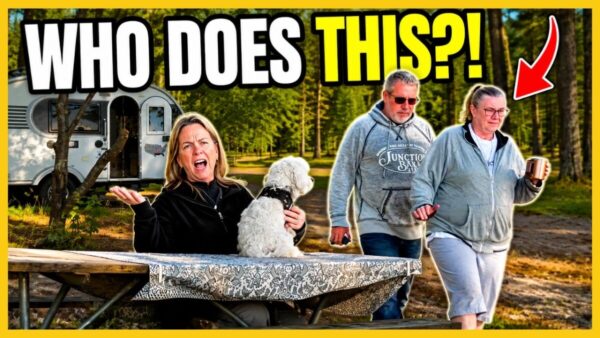
Suddenly, the campsites are so close together that you can practically hear your neighbor’s conversation from inside your camper.
If your idea of camping is peace, quiet, and feeling like you’ve escaped everyday life, these campgrounds can be disappointing.
For me, it feels less like camping and more like reserving a parking space with hookups.
How to avoid it:
Before booking a campsite, I always:
- Check the satellite view on Google Maps
- Look at the campground map
- Search YouTube for campground tour videos
- Look closely at campsite spacing
Sometimes the satellite view tells you more than the campground photos ever will.
2. The Seasonal Campground Trap
This one caught me completely by surprise.
Some campgrounds appear to be normal weekend destinations, but when you arrive, you realize most of the sites are occupied by seasonal campers.
You start seeing:
- Decks attached to campers
- Flower gardens
- Permanent decorations
- Golf carts cruising around
There’s absolutely nothing wrong with seasonal campgrounds. But personally, I often feel more like a visitor in someone else’s neighborhood than a fellow camper.
How to avoid it:
- Check the campground website carefully.
- Study the campground map.
- Look for reviews mentioning seasonal sites.
If most of the campground is seasonal camping, I usually keep looking.
3. When Nobody Else Wants It
You know the feeling.
Every waterfront campsite is booked.
Every shady campsite is booked.
Then suddenly you find a campground with tons of openings.
You think:
“Perfect! I got lucky!”
Maybe.
Or maybe everyone else knows something you don’t.
I’ve visited campgrounds with:
- Overflowing dumpsters
- Poorly maintained bathrooms
- Neglected campsites
- General signs that the campground wasn’t being cared for
How to avoid it:
Always read reviews—but read recent reviews.
A five-star review from five years ago doesn’t tell you much.
Look for patterns instead.
One negative review may be an isolated complaint.
Ten people complaining about the same thing? That’s valuable information.
4. What’s Next Door?
One of my favorite-looking campgrounds turned into one of my least favorite experiences.
Why?
Road noise.
At first, it wasn’t bad.
Then came the trucks.
Then the motorcycles.
Then apparently every vehicle within a 10-mile radius decided to drive by my campsite.
Instead of listening to birds, I was listening to traffic all night.
How to avoid it:
Before booking, zoom out on Google Maps and check the surrounding area.
Look for:
- Highways
- Railroad tracks
- Industrial areas
- Busy roads
A beautiful campsite can quickly lose its charm when you have to pause every conversation because another semi just drove by.
5. No Trees? No Thanks.
Maybe it’s just me, but when I pull into a campground with no trees, my excitement level drops immediately.
Trees provide:
- Shade
- Privacy
- Wind protection
- A feeling of being immersed in nature
Without trees, some campgrounds feel like you’re parked in the middle of a giant field.
And on a hot summer day?
That shade matters.
Thor and I both appreciate a shady campsite.
I think Thor appreciates it even more than I do.
How to avoid it:
- Look closely at satellite imagery.
- Search for campground photos taken by campers.
- Avoid relying solely on the campground’s promotional pictures.
6. The Setup Surprise
Some campsite problems don’t reveal themselves until you’re already backing in.
Maybe:
- The site is extremely unlevel.
- The hookups are much farther away than expected.
- The roads are incredibly tight.
- Your camper barely fits.
And somehow, the moment you start backing into a difficult campsite, an audience appears.
You know they’re trying not to watch.
But they’re definitely watching.
How to avoid it:
I always carry:
- An extra water hose
- An extra electrical cord
And before unhitching, I make sure everything will reach.
Trust me… moving your camper after you’ve already gotten comfortable isn’t fun.
7. Sometimes I Break My Own Rules
After all of these red flags, you might think I avoid every one of them.
Nope.
Because sometimes a campsite is simply too beautiful to pass up.
Put me on:
- Lake Superior
- A spectacular river
- An incredible mountain view
…and suddenly my red flag detector stops working.
Will I tolerate less privacy?
Absolutely.
A less-than-perfect campsite?
Probably.
A site that’s a little unlevel?
Maybe.
Some views are worth making a few compromises.
Final Thoughts: No Campsite Is Perfect
After more than 300 nights of RV camping, I’ve learned plenty of lessons the hard way.
The truth is, choosing the right campsite can make or break your camping trip.
The good news?
Most campsite problems leave clues before you ever arrive.
The more campgrounds you visit, the easier it becomes to spot those red flags and avoid making the same mistakes.
More Solo RV Camping Tips
If you’re interested in learning more about the things that have completely changed the way I camp, be sure to check out:
👉 After 5 Years of SOLO RV CAMPING, These Things Matter Most Video: https://youtu.be/zJUs2Sr7CY4
You might discover a few ideas that make your next camping trip even better.