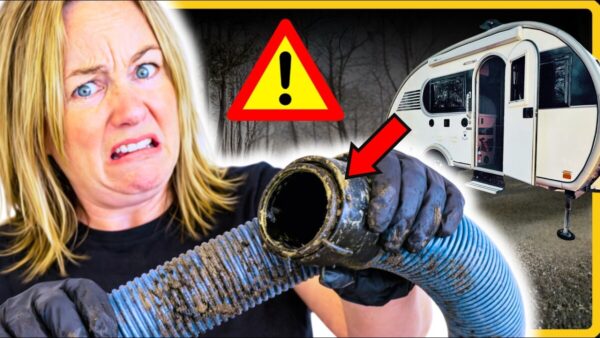
The weather is warming up, the campgrounds are calling — and your RV has been sitting all winter. Before you hitch up and hit the road, there are nine critical checks that can save you from expensive repairs, dangerous blowouts, and a ruined first camping trip of the season.
After eight years of full-time RVing, I’ve made almost every one of these mistakes myself. Here’s exactly what to check, in the exact order you should do it.
1. Check the 10-Day Weather Forecast Before You Do Anything
This is the most common mistake RV owners make in spring — and it’s completely understandable. The second the temperatures start climbing, you want to go camping. But here’s the thing: if nighttime temps drop below freezing even once after you’ve dewinterized, that water will expand and crack your pipes.
Water damage is the single most expensive RV repair there is.
Before you dewinterize, check the full 10-day extended forecast. If even one night dips below 32°F, wait—or temporarily re-winterize. Many experienced RVers even bring antifreeze along on early spring trips, just in case. You can plan your trip, but you can’t plan the weather.
📺 Watch this YouTube video: How to De-Winterize Your Camper: https://youtu.be/vHmpG1xJr30
2. Run Water Through Your Entire System and Check for Leaks
A lot of RV owners dewinterize, close everything up, and assume it’s fine. It’s not always fine.
When your camper sits all winter, connections loosen and fittings can crack. You won’t know until water is pouring out from under your sink — ideally at home in your driveway, not three hours into your trip at a remote campsite.
What to check:
- Run water through every faucet, the shower, and the toilet
- Test your water pump to make sure it kicks on
- Get under every cabinet and look for drips
- Test your water heater on both electric and propane modes
Catch it at home. Fix it for cheap. Don’t find out the hard way at your campsite.
3. Sanitize Your Freshwater Tank
Even if you don’t drink directly from your freshwater tank, you’re using that water to shower, brush your teeth, and wash your dishes. And after sitting all season — sometimes with water sitting in there for weeks at a time in the heat — your tank can develop serious odors and bacterial buildup.
That residue doesn’t disappear over winter. It just waits for you.
Sanitizing your freshwater tank takes a little time and a little bleach, but it’s absolutely worth it. If you’ve never done it before, search for a step-by-step guide or check out a tutorial video to walk you through the process.
📺 Watch this YouTube video: Sanitize Your Fresh Water Tank (Step by Step): https://youtu.be/QFTe_YcrsTc
4. Inspect Your RV Battery
Whether you camp with full hookups or go off-grid, your battery needs attention every spring. A battery that sits all winter quietly loses its ability to hold a charge — and you won’t know it’s dead until you need it most.
What’s worse: a neglected battery can leak, damaging the surrounding wiring and components. By the time you notice, you’re looking at a repair bill bigger than the cost of a new battery.
What to check:
- Look for white or bluish corrosion at the cable connections
- Look for anything swollen, cracked, or visually off
- If it’s not fully charged, put it on a charger before your trip
A dead battery means no refrigerator, no water pump, and no lights. Catch this in your driveway, not at the campsite.
5. Check Your RV Tires — Including the Spare
This one surprises a lot of people: RV tires age out before they wear out. The tread can look perfectly fine while the rubber inside is slowly breaking down — just like an old rubber band that snaps the moment you stretch it. At highway speed, that’s a blowout.
RV tires should be replaced every 5–6 years, regardless of tread depth.
To find out how old your tires are, look at the DOT number on the sidewall. The first two digits represent the week the tire was made; the last two represent the year. Also, check your tire pressure while you’re at it.
Don’t forget your spare tire. Seriously — check whether you can physically get to it and remove it. Many RV spare tires are mounted underneath the camper, and the bolts can completely seize up over time. Finding that out on the side of a highway with cars flying past is not the time to discover this problem.
📺 Watch this YouTube video: How We Moved Our Camper Spare Tire for Easy Access: https://youtu.be/oCZPkbN1vyY
6. Do a Full Walk-Around Exterior Inspection
Take a slow, deliberate walk all the way around your camper and look for things most people walk right past:
- Tiny cracks in the siding
- Gaps or lifting around any seals
- Anything bubbling, warping, or just not sitting flush
- Check your roof — water damage almost never starts big. It starts as a gap the size of a pencil tip in the sealant. One rainstorm sneaks water in, soaks the wall, and by the time you smell it or feel a soft spot, you’re looking at thousands of dollars in damage.
A $20 tube of sealant can save you everything.
While you’re out there, also check:
- Your hitch and tow connection
- Propane hoses for any cracks or wear
- Stabilizer jacks
- Your awning — extend it fully and inspect for tears
Don’t assume it’s fine because it was fine last fall.
7. Check Inside for Signs of Mice
Fair warning — this one can be a little unpleasant, especially if your camper sat all winter in a location where mice are common.
What to look for:
- Small, black, oval-shaped droppings (check cabinets, drawers, under the sink)
- Chewed fabric in bedding or cushions (mice use this for nesting material)
- Chewed wires — especially behind panels or plastic plumbing — which can cause serious and expensive damage
- A foul, musky odor, which often signals a significant infestation
Catching this early means a manageable cleanup. Missing it means chewed wiring and a very unpleasant first night at camp.
8. Turn Everything On and Test It
This is the step most people rush or skip entirely. Go through your RV and turn on every single system:
- Refrigerator
- All stove/oven burners
- Air conditioner
- Furnace
- Water heater
- Every electrical outlet
- Check your breakers
Then go through everything battery-powered: flashlights, keyless door entry, your carbon monoxide detector, and your smoke detector. Replace batteries where needed.
Here’s the reality: when you’re 5 minutes from a hardware store, none of this feels like a big deal. When you’re 3 hours from the nearest town, and the furnace won’t kick on at 9 PM, it’s a very big deal.
Also, test your safety devices specifically:
- Press the test button on your smoke detector
- Test your carbon monoxide detector
- Check the gauge on your fire extinguisher — make sure the needle is in the green
Carbon monoxide is invisible and odorless. A small, enclosed space makes a faulty CO detector far more dangerous than in a house. This check takes 90 seconds. There’s no excuse to skip it.
📺 Watch this YouTube video: How to Test your RV Safety Devices: https://youtu.be/dbnm7B7aAKM
9. Do a Test Run Close to Home
This is the step that actually tells you if you’re truly ready — and it’s also the most enjoyable one.
Before your first real trip of the season, book one to two nights at a campground 30–45 minutes from home. Preferably with hookups. Then use everything: cook a meal, run the air conditioning, take a shower, sleep in it.
No matter how thorough your prep is, a test run will often surface something unexpected — a burner that won’t light, a weird noise, a small drip. And when you find it 30 minutes from home, it’s an easy fix. When you find it 4 hours into a remote camping trip, it’s a stressful ordeal.
Use this time to also:
- Clean and organize the interior
- Get rid of anything you never used last season
- Restock your essentials (paper towels, dish soap, basic tools, medications, etc.)
When you pull back into your driveway after that test run, you’ll feel genuinely confident and ready. That’s the whole point.
Get Your RV Spring Checklist (pdf)
Before you head out this spring, grab my free RV Spring Prep Checklist I put together — it covers everything in this post, so you don’t have to take notes or try to remember it all. It’s the same list my hubby Tom and I actually use before every first trip of the season.
Click the Download File button to save it to your computer or click on the print icon located on the upper right of the document to print this PDF.