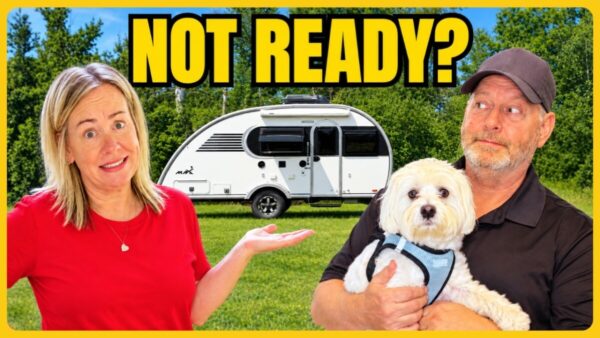
I’m 63, my hubby Tom is 66, and I’m preparing to make a small camper our full-time home. But just two years ago, stepping in and out of that camper was painful enough to send me home early.
And now I want to live in it?
Yes, I do. But that experience is changing how I prepare.
If you’re wondering what seniors need to know about RV living, I’m sharing five choices I’m working through before we move in. After eight years of camping, I have plenty of experience with trips. Full-time RV retirement will be something new.
I want this retirement adventure to feel good when we’re living it—not just when I’m planning it.
1. Slow Down and Stay Longer
For eight years, I camped like I had to be home on Sunday. Usually, I did!
So I squeezed everything in: hiking, waterfalls, exploring, and sometimes moving to a different campsite if I didn’t like the one I had. My camping time was precious. I wasn’t going to spend it staring at someone else’s sewer hose.
When I picture Tom retiring this spring, my first thought is, “We’re free! Let’s go!”
But I know me. Without a deadline to head home, I could keep going full steam ahead. One more trail. One more waterfall. One more place we have to see.
Three months later, we could be exhausted from retirement.
Give Yourself Permission to Enjoy Quiet Days
I’m planning longer stays—a week, maybe two—so we have time to enjoy a place without constantly hitching up or squeezing in another adventure.
That pace will be different for us. Getting comfortable with quiet days might take practice.
But full-time RV living after 60 doesn’t have to mean seeing everything as quickly as possible. For us, it means learning to enjoy staying put, too. I’m taking a little advice from the Eagles: take it easy.
2. Use Travel Choices to Help Control RV Living Costs
When I put together my estimated RV retirement budget, fuel stood out as an expense I could influence.
Every towing day costs money to move our home from one place to the next. Staying longer gives us more time to enjoy being there, with fewer towing days to pay for.
I can adjust how often we move, where we stay, and which discounts we use.
My Experience With the Senior Lifetime Pass
Last year, I bought the America the Beautiful Senior Lifetime Pass for $80.
At participating federal campgrounds I’ve booked through Recreation.gov, I’ve saved 50% on the camping fee. It doesn’t apply to every campground or every fee, but my savings have already exceeded what I paid for the pass.
Seeing that discount pop up makes being a senior feel pretty good!
I’m excited to look into other senior discount programs. But I don’t want a stack of paid memberships simply because they promise savings. I want to know we’ll actually use them.
We also love boondocking. Finding free places to camp can help stretch our campground budget.
What senior discount programs should I look into for campgrounds, travel, or RV life? Tell me in the comments below!
3. Make Healthcare Part of Your Travel Plan
Healthcare was the biggest expense in my estimated RV retirement budget. That number floored me.
But paying for coverage is only part of the question. I also need to understand how we’ll get care while traveling.
I can spend hours researching a campsite with a beautiful view. Our healthcare deserves at least that much attention.
How Two Hip Replacements Changed My Planning
A few weeks after the painful camping trip I mentioned earlier, I had my first hip replacement. After recovering, I had my second hip replaced.
I went from looking forward to upcoming camping trips to canceling them and planning surgery and recovery.
I know firsthand how quickly a health problem can change your plans—and how much more it can involve than a doctor’s appointment.
As I prepare for full-time RV living, I’m asking:
- Could we recover comfortably in our camper?
- Would we want to stay near family or friends for help?
- How would we change our travel plans if one of us needed treatment?
Questions I’m Asking About Healthcare on the Road
I’ve started researching Medicare, and there’s more to sort through than I initially expected: enrollment timing, coverage options, and how the coverage we choose will work when our regular doctors are several states away.
Prescription refills are another question I need answered.
If one of us needs treatment or recovery time, I want enough flexibility to stay put or change our route.
I don’t have all of this figured out yet. These are the questions guiding my preparation, rather than recommendations for a particular insurance plan. Choosing our coverage—and understanding how to use it on the road—is a big part of getting ready for our new RV retirement life.
4. Put Family Visits on the Calendar
Our three daughters live in Oregon, Texas, and Iowa. My dad lives in Arizona.
I already drive or fly to see them several times a year. I’m not willing to give that up just because my home will have wheels.
It will be easy to fill my travel wish list with places. I want to make time for family and friends, too.
Conveniently, my kids and my dad have given us four great destinations!
Plan Around People as Well as Places
When I plan our travels, family visits will be on the calendar:
- Holidays we’ve talked about ahead of time.
- Longer visits when they work for everyone.
- Flexibility for things we can’t schedule.
Sometimes we might choose an ordinary campground because it’s close to someone we love.
Grandkid hugs? I’ll take those over a campsite with a view.
I can go back and hike a trail another time. I can’t go back and attend a birthday I missed.
For me, retiring in an RV needs to include those connections—not make them harder to maintain.
5. Choose a Camper Either of You Can Handle Alone
I love small campers and travel trailers. Being able to fit into places where bigger rigs can’t go is a freedom I still value.
Tom and I would like a little more space and bigger tanks for full-time RV living. But before trading our Little Guy Max for something different, I need to ask:
If one of us couldn’t help temporarily, could the other handle the camper alone?
Honestly, I’m thinking about me here.
Tom is handy. But if he gets sick or there’s an emergency, I need to be able to step in. That might mean packing up and moving our home when neither of us expected to.
Picture the Work, Not Just the Extra Space
I’ve done a lot of solo camping in my Little Guy Max. I know I can handle this camper.
With a different camper, it would be easy to picture enjoying more room and making fewer trips to the dump station. I also need to picture myself doing the work:
- Lifting and handling gear.
- Reaching what I need.
- Packing up when I’m tired.
- Managing the camper without Tom’s help.
Extra space and bigger tanks would be nice. Confidence that I can manage our home myself is a requirement.
Preparing for RV Retirement One Choice at a Time
For me, what seniors need to know about RV living comes down to preparing for everyday life as well as the adventure.
That means finding a pace we can enjoy, making travel choices that help our budget, understanding our healthcare options, staying connected to family, and choosing a camper I can handle.
I’m an experienced camper, but a beginner at full-time RV living. I’m sharing the preparation as it happens—including the questions I’m still working through.
And if you’ve heard me complain about my little black tank, an upcoming video will show the whole routine. After six days camping with Thor without sewer hookups, it’s time to take the camper to the dump station. I’m timing the process to see how much of my camping day goes straight down the drain.
Apparently, some adventures come with gloves.
Subscribe to Randi’s Adventures on YouTube for new videos every Thursday, and follow my full-time RV living journey.